Selected Haibun by Tom Clausen
15 Sunday Dec 2013
Posted in Tom selected favorites
15 Sunday Dec 2013
Posted in Tom selected favorites
15 Sunday Dec 2013
Posted in Dim Sum
15 Sunday Dec 2013
Posted in Tom selected favorites
15 Sunday Dec 2013
Posted in Tom selected favorites
she looks long
at the ocean,
that place she threw
a rock and
her bracelet too…
the concert over,
the crowd empties
out into the street,
where people and music go
in some eternal tune
so the day
with its snow
and cold is done,
a three star
sudoku too!
passing by so close
and quietly…
it’s as if the dark permits
the deer and me
a mutual sense of safety
she presides over an hour
this sunny spring day…
when my focus begins to shift
she tells me
we aren’t done yet!
of this world
one day
in a third floor mansion,
the next
at the bottom of the sea
so much spring going on
yet the old truck,
going nowhere,
has a bird’s nest
built on a back tire
by myself
driving by the lake,
the one I once drove by
with my mother,
that last trip out of town
in the attic to clean
I read letter’s from my parents
to each other…
so many things
that cannot be thrown out
I check out both ends
of the Staten Island ferry
and join the majority…
those who look ahead
to where we are going
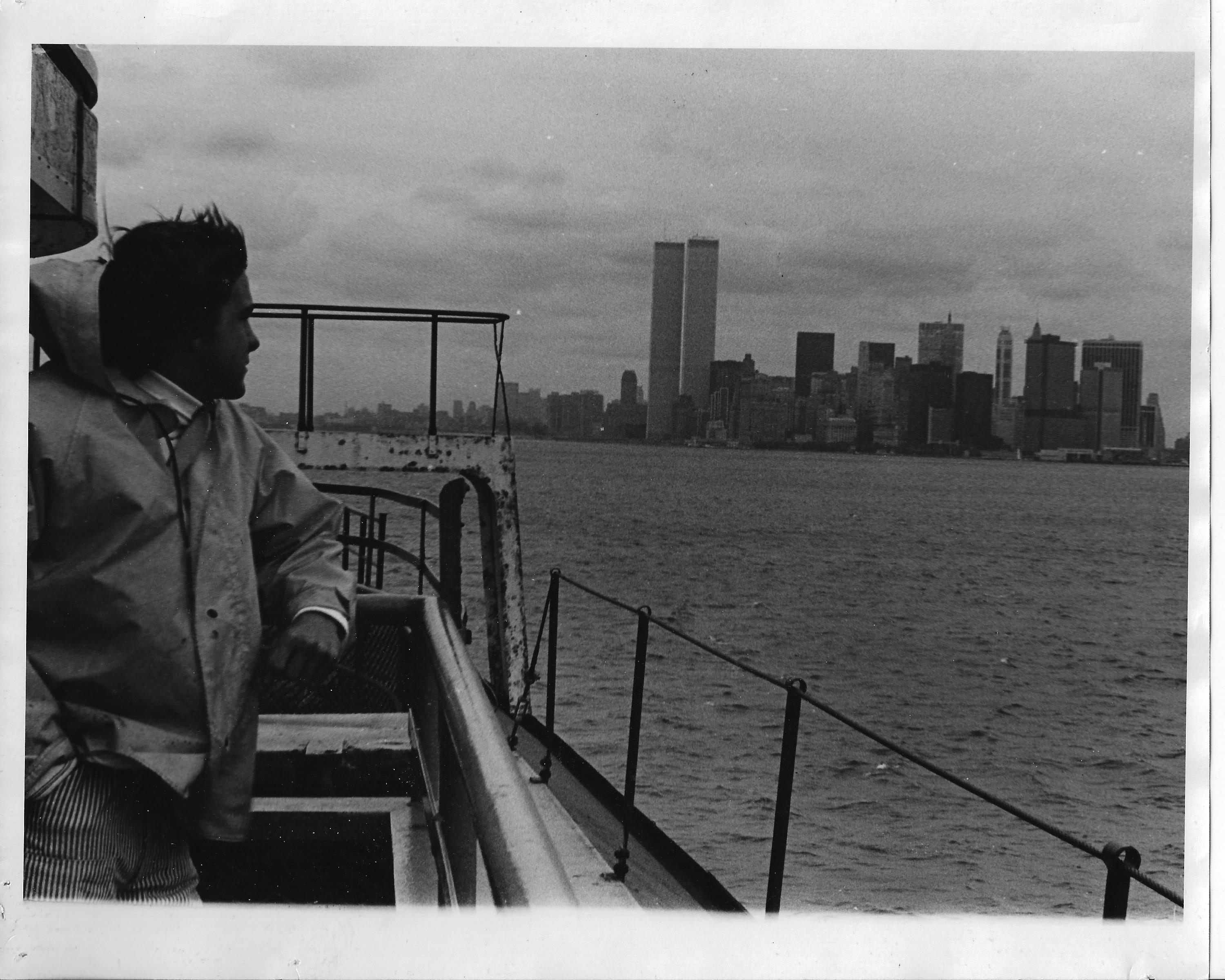
again this year
the leaves fall
and I watch…
the world as it is
still too much
late night
alone in the stillness
the Christmas lights
go off and on,
off and on…
before dawn…
this timeless journey
in the here and now
exploring further
myself again…
cracks in the plaster
have appeared again,
as inevitable as ever
this difference
between us
on my bike ride home
I pass a man and his kids
who both wave at me…
my happy wave back
in cycling fellowship
how lovely
to do nothing at all
as these wind gusts
billow her blouse
a bit open
no contest at all
sitting here under a willow
watching the water
while all sorts of chores
remain undone…
yet another message
to be found out here,
this plains town
football field
without a scoreboard
gently
the morning has come,
the ash tree leaves a flutter
as if I should hesitate
to find my way into the day
I give up the search
and go out to buy
another bottle…deciding where
to safely hide it
I find the missing one!
always wanting
to speed further away
from that day, pulled over
to be given a ticket
for my family to see
made my bed
and lying in it
a whole night
without much sleep
but plenty of positions…
perpendicular
to my path here
late in the day
quickening my step
someone I want to see…
there was a first day
on the job and now
forty-two years later
I arrive at the last day
and walk out the door…
15 Sunday Dec 2013
Posted in Tom selected favorites
15 Sunday Dec 2013
Posted in Haiku Way of Life
by Tom Clausen
Ten years ago, when I first dipped my toe into the haiku pond rather tentatively, I was nervous with excitement and amazed at how kindred and welcoming my first contacts were. The feeling that I got from haiku was true gladness to have discovered a manner of expression that completely clicks for me – it just simply felt right, perfectly concise, precise and not telling me how or what to feel as much as simply giving me the wholly decent chance to get there on my own. The brevity and discipline of the haiku form was the obvious antidote to combat my tendency toward wordiness, overstatement and excess. It was entirely refreshing to me that haiku insisted on the writer utilizing the fewest words possible – to convey the poetic in the ordinary anywhere, anytime.
I can remember early on being so happy with haiku that internally I vowed to read and write haiku for the rest of my life. Such was the appeal and strength of feeling I had then and still have to this day.
Admittedly, in these past ten years there have been moments of doubt, dry spells, lulls and wonders – if I had maybe lost my way and lost interest in haiku. Yet repeatedly, I’ve discovered that reading haiku and finding good poems can and will spark my interest and get me going again. A great haiku is its own best endorsement. To read a great haiku is bound to reinvigorate anyone who has at any time felt the magnetic charm of haiku. The true satisfaction I get from each great haiku is but one of the reasons I avidly remain engaged and feel assured now as I did ten years ago, that I’ll keep reading and writing for a long time to come if not for the rest of my life.
Haiku puzzle me. There are many haiku I read that don’t move me and do disappoint. Yet I find most haiku at least pleasant and many I find wonderfully intriguing, even inspiring. The very best haiku often appear seamlessly “easy” to have written. This, of course, is rarely so, which makes the illusion of ease beguiling. Speaking for myself here, I feel no closer to any consistent ability to write a good haiku now than I did when I began ten years ago. This phenomena is both compelling to keep at it, and of course, a bit to a lot frustrating. It does guarantee a perpetual state of beginningness that is somewhat unique and humbling. It is quite appealing that haiku are highly portable and can be worked on as an exercise in the mind wherever you are until it becomes itself, just right.
John Stevenson once wrote in a letter to me that he viewed his joining the haiku community on the order of moving to a new small town where the community was both welcoming and eclectically interesting. I knew what he meant – it spoke well for my own sense of connection and camaraderie that began almost immediately after I read a news article in an Ithaca paper profiling Ruth Yarrow. Shortly after reading this awakening article, I sought out anything “haiku” I could find – my first source was Cor’s HAIKU ANTHOLOGY through which I then subscribed to Modern Haiku, Frogpond, Wind Chimes and Brussel Sprouts, to name a few.
The breadth and brilliance I discovered in the many voices I read at that time instantly aroused in me a sense of deep inner knowing and inspiration that is the connection of a well-conceived haiku. I’ll never forget the initial immersion and beautiful opining I felt reading poems like these from Cor’s Anthology:
time after time
caterpillar climbs this broken stem
then probes beyond
– James Hackett
the swan’s head
turns away from sunset
to his dark side
– Anita Virgil
hot night
turning the pillow
to the cool side
– Cor van den Heuvel
the river
leans upon the snag
a moment
boulders
just beneath the boat
it’s dawn
With my own writing, I have learned repeatedly not to trust myself and to graciously place my trust in the editors, haiku community, friends and my wife to discern what is truly worthy of being submitted or published. Here is my sense of what goes into haiku creation – from a letter written to Jim Kacian:
Over the years I’ve valued very much the little notes of feedback from editors – we each find our way more or less collectively by virtue of the community where the group is constantly giving guidance to the individual. I often feel than any little success I’ve had is less about me and more about the range of editors and haiku friends, and the guidance I’ve received simply be reading widely what’s out there, then forgetting it, but letting the spirit of it seep into and permeate my
being …
I am tremendously grateful for the work of editors who in tireless devotion sift and cull from the masses of submission those that they deem worthy. The number of off-base, uninspired, and maybe even embarrassing attempts at haiku I’ve created over this past decade is highly relevant to why I must keep at it. With hope that an improved sense of craft and consistency will develop!
Somewhere I read that Basho wrote about 2000 haiku in his life of which 100 or so are considered excellent, and of which he believed there were maybe ten that truly hit the mark. This is a tough ratio but perhaps holds a realistic perspective for us all. Excellent haiku craft requires tireless resolve to keep at it despite the misses and bunches of weaker attempts, with hope that out of the effort will surely come some keepers, and, if we are lucky, serendipity may provide an opportunity to create a haiku that will stand the test of time.
There is no way to predict what will become worthy, but the whole process of jotting notes, refining, submitting and seeing what gets selected is a near endless divination of what is and is not haiku. This could playfully be called the Haiku Wars and they are no doubt as endless as the poets putting their heart into the form. It is worth keeping at it just to see what and who next will break the surface of our haiku pond, either jumping in, feeding or getting out.
A major reason I keep reading haiku is that I hope to find good ones or another haiku that simply “wows” me and fills me with a grateful sense of being alive, so that I am one with that haiku moment (even if just a flash!).
At work nearly ten years ago, I posted this poem by Ryokan:
the thief left it behind
the moon
at the window
after the garden party the garden
HAIKU HAPPENS, as a bumper sticker proclaims, will happen to us only if we remain open and ready to engage in the range of myriad nuances and subtle cues from nature that are voices simultaneously taking us inward and outward, connecting us with the nature we have come from and will return to.
In R.H. Blyth’s THE HISTORY OF HAIKU, he lists thirteen characteristics of the state of mind which the creation and appreciation of haiku demand. They are:
FAITH
SHARING
DISCIPLINE
CONCISION
SOLITUDE
HUMILITY
AWARENESS
RITUAL
CREATIVITY
Creativity is moving with one’s life and recognizing it to be worth recording and recreating in part of in whole.
CENTERING
No one escapes unscathed the pains and burdens in life. We each develop ways of dealing with these inevitable aspects of life. For me, haiku and the centering that it inspires has provided a useful strategy for coping with more difficult times. At times, our existence creates a paradoxical tension where we feel a potential to be unified with everyone and everything, yet feel simultaneously, every alone and separate . . . to me, a haiku is a harmonizing of unity and separation.
TRUTHFULNESS
Basho, in the following taken from Eric Amann’s highly recommended book on haiku, WORDLESS POEM, further suggests the utter truthfulness of haiku when he states, Haiku are a way of seeing, hearing and feeling, a special state of consciousness in which we grasp intuitively the identity of people and nature and the continuity between ourselves and the larger cosmos.
Further, Basho said, Learn from the pine about the pine, from the bamboo about the bamboo. But always leave your old self behind, otherwise it will get between you and the object. Poetry springs out of its own when you and the object have become one, when you have looked deep into nature to see the hidden gleam. No matter how well worded your poems may be, if the feeling is not natural, if you and object have not become one, your poems are not true haiku, but merely imitations of reality.
CURIOSITY
PATIENCE
I’d like to conclude with a final thought that summarizes what sustains my haiku habit. Haiku for me is the perfect record of my simply existing here and now. Each haiku, in a way, can be thought of as a farewell poem – an acceptance of the transitory nature of everything. Reading entries from a lifetime’s worth of my journals is at this point, only of minimal interest to me, and I’m sure not even that to anyone else. Yet the better of those haiku I’ve written, I am pleased to return to and would be happy to have someone else find and read someday.
The above paper was read by the author at the Haiku Society of America meeting, September 19, 1998. Grateful thanks to the poets for permission
to reprint their haiku here.
BACK TO CONTENTS PAGE
Learn how to listen as things speak for themselves – Basho
15 Sunday Dec 2013
Posted in Chapbooks
as useless
as this hard rain
on frozen ground—
these memories of all the people
I once was
so many chances
in a day
to say something to you
but here it is
growing late
my beer gone flat
but out of duty
I finish it—
living all these
middle-aged days
‘A highly recommended addition to your tanka collection. Poem after poem demonstrates the mastery of a highly skilled poet willing to engage the unsentimental realities of his existence.’
—Lynx
15 Sunday Dec 2013
Posted in A Work of Love, Chapbooks, Published Poems, tanka
Tags
*
*
*
*
15 Sunday Dec 2013
Homework by Tom Clausen. Saddle-stitched, full color cover, 4″ x 6″, 36 pages. $10., ppd. ISBN: 1-903543-00-2. oop- by Snapshots Press, 132 Crosby, Liverpool, L23 8XS, England.
To quote the jacket notes: “Focusing squarely on domestic life, this collection of haiku, senryu, and tanka is often funny, often sad and always paradoxically both familiar and eye-opening.” It cannot be said better nor more succinctly what this newest book by Tom Clausen contains. I can only add my continuing praise for Tom’s work. It is always a revelation and delight how he seizes on the tiniest experience, and through his examination of it and the cool observation his own feelings, carries it over into a major event. This leaves the reader wondering, “Now, why did I not notice that?” and “Why did I not think of that as material for a poem?”. It seems that tanka is especially designed for the methods of Tom Clausen. Even when aware of the smallest thing, he is also aware of how that thing or event is affecting him. This occurs even in his haiku.
While some purists might fault his haiku for not being closely enough aligned with the nature-nature viewpoint, his sensibilities are absolutely accurate for tanka. This collection gains, I think, by the inclusion of his haiku (which often portray the lighter moments of family living). They seem to play off and actually highlight the attributes of his tanka. Altogether, the editing and arrangement of the poems seems especially fine and relevant. For anyone who has grown up in a family or is living in a family now, this book will take away those terrible moments of aloneness when one felt that no one else in the world ever had such moments of doubt, despair and pure undiluted joy. Tom has been there, and he has the courage to face them directly and honestly, and to continue to hang with the feelings until he has created pure poetry out of them.
no longer me
it proves a mystery who it is
I’ve become
walking around this house
with my family there inside
I sort of knew
my coffee cup
was empty –
so much I look in it
just to see
The sensitivity of the editor, John Barlow, is shown in the choice of a drawing done by Tom’s young daughter, Emma Clausen, as cover along with the insider joke of the title of the book – Homework. Delight piles on delight with this one.
15 Sunday Dec 2013
Posted in Chapbooks
daybreak-
the rubber duck alone
in the empty tub
standing here
at this window, remembering mother
standing here
my child asks
what keeps the moon up?
you do, I reply
the door open
to the meditation room
no one there
waiting…
behind opaque glass
snow falls
bitter cold morning-
compressed with the trash
some of sunrise
quiet evening-
a spider walks its shadow
across the wall
goldenrod gall
quivers-
blowing snow
winter moor-
my footsteps come back
to me
dark morning snow
the bus packed
with faces
light snow…
the students study
in silence
late afternoon-
pigeons bank back to
the building
watering their plants
seeing their house
without them
last ray of sun
in the feeder
a sparrow
closed-
deep inside
a light
a stranger smiles-
the elevator closes
and goes up
my son asks
how far it goes
… space
lunch alone
without a book
I read my mind
drought-
ants disappearing
into cracked earth
still summer night-
shining a flashlight
around the garden
for my son:
lifting a stone
to see
formal garden-
a cabbage butterfly’s
whimsy
urinating…
the delicate breeze
among the ferns
cold front
the forgotten dulcimer
pings
heavy rain-
lilac blooms smush
against the window
lying in the leaves
the sun shares the shape
of her corduroys
sentinel pine-
roots running every which way
showered in moonlight
deep overcast-
chickory blue
out of concrete rubble
late day sun-
deep on the forest floor
a seedling
beach walking…
collecting pebbles
and letting them go
floating in its own
little place in the rocks
a diet Coke can
quietly, he goes about
reading the names
grave by grave
early autumn blue-
last turn out of town
facing the hills
as we talk…
wind blowing leaves
out of the trees
snow flurrying…
the deer, one by one, look back
before they vanish
in the dark
through the window light
my wife and child