• https://tomclausen.wordpress.com/
  • Mann Library reading 4-21-09

tom clausen

~ poems and photos

Tag Archives: writing

From Conflict to Poetry – tom clausen

16 Monday Nov 2026

Posted by Tom Clausen in americana, Favorite Haiku, haiku, nature, Published Poems, Readings, senryu, Tom Clausen biographical info, Tom poems at other sites

≈ Leave a comment

Tags

From Conflict to Poetry, haiku, Ithaca, nature, poem, poems, poetry, writing

This was published in Simply Haiku in the Summer of 2005 -v.3 no.2

Feature ~Tom Clausen
From Conflict to Poetry
Some days, sometimes, life becomes an unfortunate series of conflicts. I would like to examine how conflict in our lives might inspire us to read and write haiku and other short poetic forms. I believe turning to these forms as a response to conflict creates for us an opportunity both to lose and find our selves, as well as to gain some resolution, levity and redemptive understanding. Conflict in our lives, as I’m sure everyone here can attest, is epidemic. It can range from the petty, everyday variety to the profound, deeply unsettling type of conflict that makes our very existence miserable.


The list of how we define conflict is as endless as the days and the lives of those experiencing these conflicts. In examining the self, it becomes apparent that conflict creates in us incentive and impetus to recreate our reality or at least to adjust our understanding of reality. In a critical sense, it is conflict which challenges and upsets our old, comfortable self-understanding. This may lead to a reconfiguring of the self which in essence we have merely invented as a reflex and reaction to the myriad circumstances, needs and desires we experience daily. The chameleon of our self usually remains beyond the conscious control, unless of course we are a saint, a Zen monk or in some other way tremendously disciplined in the ways of the self.


As we go along in life we cling to this self like a life preserver. After awhile we may begin to recognize that the self, like all forms in nature, is subject to change and extinction. Carrying identities and shedding them like snakeskins is a lifelong and humbling negotiation beginning on the playground and requiring each of us to close down and let go of significant parts and ideas we have of our self all along the way. Yet, combined with these losses, may come the discovery that a certain currency of self exists in concert and unity with all things, great and small, simple and complex. This currency always exists but may be only discovered and intelligible when we feel deeply the wheel of our life turning so that we begin to look, listen, and notice our ‘self’ with extra-sensory interest and attention. It is at such times of awakening, often in the midst of conflict, that our perception to receive poetic messages opens. These messages visit us with heart lasting truth and insight which may dissolve as quickly as it arrives. Haiku are from this realm, and the best of haiku give us glimpses at a uniquely clear and liberated relation to our sometimes imprisoning and limited alone little self.


As writers we have two main paths of response to our conflicts:

1. We can directly confront our conflicts by cathartically writing about them and in the process gaining both perspective and distance which in turn, often provides levity. I often favor this approach and have found a healthy degree of self therapy is available by simply reporting on the essence and edge of my conflicts, aware that they are as likely to be universal as they are unique. As the Buddha pointed out, there is not one house that does not experience struggles and suffering. When we share and find ways to help each other bear burdens, we begin on a path of liberation even if in our writing we feel as if we are simply walking in place!

2. The second path is to seek alternative reality by choosing to contact apart or a level in the self that is not feeling conflicted. In other words, to basically shun and reject conflict in favor of a reality that is at least seemingly, if only temporarily, free from conflict.


This response I liken to the poet in person being much like a dream catcher; catching the burdensome while allowing those joys and affirming visions to pass through. The widely sought serenity that is often equated with nature and nature poems is perhaps the written representation of those who in response to conflict are inspired to focus on images, places and feelings that are not conflicted. I’ve often wondered if the most classically undramatic and still point nature poets are not selectively creating what they as individuals most need as a response to their personal conflicts or those in the world at large. Perhaps as a group, those of us who associate and strongly relate to haiku are doing so as a collective response to a world gone quite mad with too many conflicts.


D. T. Suzuki in his introduction to Essays in Zen Buddhism points out: “life is after all arguing, a painful struggle . . . this however is providential for the more you suffer the deeper grows your character, and with deepening of your character you read the more penetratingly into the secrets of life.” A gift of conflict then, encourages us to read these secrets, and haiku offer a way to articulate and share our findings. Each of us writing haiku and other short forms is as a reporter of sacred and small bits of news about our transitory passage through this mysterious life and world. Conflict is our reality check—our chance to reflect, review, and take time out to look, listen . . . and note! When the poetic and intuitive speaks to us, we become a medium for a message that allows us to be refreshed with seeing anew and again that which simultaneously lets us lose and find our self.


In David Steindl-Rast’s book A Listening Heart, he has an insightful chapter devoted to haiku called “Mirror of the Heart”. In this chapter, he begins by calling haiku a mirror; “Like a crystal, the facets of which mirror and bring together so many different reflections of the world around it, the haiku shows us some important aspects of the world gathered together and reflected as if in one brief sparkling flash. The clarity and precision of this remarkable poetic form is only heightened by the fact that it is so utterly unsentimental. So is a mirror.” As we go about our day to day rhythm of routines, a degree of unconscious-automatic pilot type behavior dims our awareness and attention to see and feel many miracles and poetic messages about us.


The calling of haiku requires of us a daily recognition of moments, simple and subtle as they may be, that rise above the plain of our life and give a good glow of knowing . . . bringing humble grounding and poetic order to the cottage of the self. Brother Steindl-Rast describes this aspect of haiku as a “Peak Experience” . . . “for we do experience our lives as relatively long stretches of ascent and decline culminating here and there in brief moments for which a peak is the perfect image. What makes a Peak Experience so liberating is that precisely for once I no longer feel and know that I know but simply feel and know just that. Only afterwards can I reflect on it and so talk about it. And what I am then inclined to say is something like “I was simply swept off my feet,” or “I was out of myself, carried away.” Even though it might have been for a split second only, “I had lost myself.” This was all. But not quite all. For looking back I will so admit that at the moment of my Peak Experience I was more truly and more fully myself than at any other time. And so I find myself confronted with the strange paradox that I am most truly myself when I forget myself. When I lose myself, I find myself.


To receive and record haiku is a challenge requiring considerable patience and readiness for those moments of serendipity when suddenly like a candid camera we are shown ourself in a most special way. It takes practice and regular reading to discover the breadth and depth of the endless ways haiku can be felt. That conflict and adversity may turn us to writing, is in no small way an honoring of our life and all life and can be the compassionate venture beyond our self on the way to find our self. . . . In Francine Porad’s collection The Perfect Worry Stone, Connie Hutchinson writes in the preface: “Greeks carried “worry stones,” usually agates, in their pockets. Fingering them had a calming effect, reducing anxiety. As haiku poets, we observe the moment, craft the poem. Poet and reader re-experience the moment through the poem. Haiku in all these aspects engage us with life, diverting our attention from ineffectual worry over personal and communal pains, redirecting our thoughts and energies. Haiku is the perfect worry stone. In my life I have found considerable solace in being able to write about my personal conflicts, moments where I felt moved to pause, reflect, regroup and recognize that even in conflict and distress are silver linings and the potential for poetry that each of us can find in our heart . . . and in turn move on from our conflict through the poetry we create from it.~ Tom Clausen
waking me
just to tell me
she can’t sleep


Some poems from my chapbook, published by Snaphot Press in 2000, entitled, Homework:


how long he cries
for the little shell lost
on the way home

**

home from work …
the little one brings me
an empty wine bottle

**

playing a child’s game
I learn all
his rules

**

all through
his temper tantrum
her calm

**

now that I’m over
my bad mood,
she’s in one

**

she’s waited up …
to have some last words
with me

**

while brushing my teeth
she tells me again:
“let’s move”

**

the plumber
kneeling in our tub
– talking to himself

**

done –
the repairman tells me
any fool can do it

**

the snow
moves me
window to window

**

second day
of the New Year:
taxes arrive

**

at the mailbox
the emptiness
of another day

**

outside the glass door
our old cat has forgotten
it wanted “in”


Tom Clausen lives in Ithaca, NY with his wife, Berta Gutierrez, and their son, Casey (16) and daughter, Emma (10), in the same house Tom grew up in. Tom works in a library at Cornell University where he used to post haiku in an elevator for patrons. This has evolved to become a link at the Mann Library home page featuring a daily haiku. He became enchanted with haiku and other short poetic forms in the late 1980s after reading an article about Ruth Yarrow, a fellow Ithacan at the time.Tom has five chapbook collections of haiku and tanka: Autumn Wind in the Cracks, Unraked Leaves, Standing Here, (self published) A Work of Love (Tiny Poems Press) and Homework (Snapshot Press, UK).


Haiku Way of Life – tom clausen

15 Sunday Nov 2026

Posted by Tom Clausen in haiku, Haiku Way of Life, nature, Published Poems, Tom selected favorites

≈ Leave a comment

Tags

Awareness, Centering, Concision, Contradictoriness, Courage, Creativity, curiosity, Discipline, faith, freedom, Grateful acceptance, haiku, Haiku Society of America, Haiku Way of Life, HSA, Humility, humor, jim kacian, loneliness, love, Materiality, Non-intellectuality, Non-morality, patience, poem, poems, poetry, R.H. Blyth, ritual, Selflessness, sharing, Simplicity, solitude, Truthfulness, Wordlessness, writing

A Haiku Way of Life by Tom Clausen

A beginning place for me is to go back to the haiku I read and the various books and
essays about haiku which made indelible impressions and so captivated me at that time.
To this day, the gift and sense of those earliest readings remain very strong.
The first haiku I encountered were in Cor van den Heuvel’s HAIKU ANTHOLOGY,
R.H. Blyth’s multi-volume series and numerous individual books by authors I discovered
through Cor’s Anthology.

Ten (now twenty-some) years ago, when I first dipped my toe into the haiku pond rather
tentatively, I was nervous with excitement and amazed at how kindred and welcoming
my first contacts were. The feeling that I got from haiku was true gladness to have
discovered a manner of expression that completely clicks for me – it simply felt right,
perfectly concise, precise and not telling me how or what to feel as much as simply
giving me the wholly decent chance to get there on my own. The brevity and discipline
of the haiku form was the obvious antidote to combat my tendency toward wordiness,
overstatement and excess. It was entirely refreshing to me that haiku insisted on the
writer utilizing the fewest words possible – to convey the poetic in the ordinary
anywhere, anytime.

I can remember early on being so happy with haiku that internally I vowed to read and
write haiku for the rest of my life. Such was the appeal and strength of feeling I had then
and still have to this day.

Admittedly, in these past ten years there have been moments of doubt, dry spells, lulls
and wonders – if I had maybe lost my way and lost interest in haiku. Yet repeatedly, I’ve
discovered that reading haiku and finding good poems can and will spark my interest
and get me going again. A great haiku is its own best endorsement. To read a great haiku
is bound to reinvigorate anyone who has at any time felt the magnetic charm of haiku.
The true satisfaction I get from each great haiku is but one of the reasons I avidly remain
engaged and feel assured now as I did ten years ago, that I’ll keep reading and writing
for a long time to come if not for the rest of my life.

Haiku puzzle me. There are many haiku I read that don’t move me and do disappoint.
Yet I find most haiku at least pleasant and many I find wonderfully intriguing, even
inspiring. The very best haiku often appear seamlessly “easy” to have written. This, of
course, is rarely so, which makes the illusion of ease beguiling. Speaking for myself
here, I feel no closer to any consistent ability to write a good haiku now than I did when
I began ten years ago. This phenomena is both compelling to keep at it, and of course, a
bit to a lot frustrating. It does guarantee a perpetual state of beginning that is
somewhat unique and humbling. It is quite appealing that haiku are highly portable and
can be worked on as an exercise in the mind wherever you are until it becomes itself,
just right.

John Stevenson once wrote in a letter to me that he viewed his joining the haiku
community on the order of moving to a new small town where the community was both
welcoming and eclectically interesting. I knew what he meant – it spoke well for my
own sense of connection and camaraderie that began almost immediately after I read a
news article in an Ithaca paper profiling Ruth Yarrow. Shortly after reading this
awakening article, I sought out anything “haiku” I could find – my first source was Cor’s
Haiku Anthology through which I then subscribed to Modern Haiku, Frogpond, Wind
Chimes and Brussel Sprouts, to name a few.

The breadth and brilliance I discovered in the many voices I read at that time instantly
aroused in me a sense of deep inner knowing and inspiration that is the connection of a
well-conceived haiku. I’ll never forget the initial immersion and beautiful opining I felt
reading poems like these from Cor’s Anthology:


time after time
caterpillar climbs this broken stem
then probes beyond
– James Hackett

                                     the swan's head 
                                  turns away from sunset
                                         to his dark side 
                                                 – Anita Virgil 

                                             hot night 
                                        turning the pillow 
                                         to the cool side 
                                      – Cor van den Heuvel 

And the following two by John Wills that are haunting in their dreamlike poignancy:


the river
leans upon the snag
a moment

I am so drawn to that snag, the force of that river and that perfectly rendered moment
where the snag no longer can hold forth and surrenders. It is staggering that eight words
can convey something so evocative and dynamic.


boulders
just beneath the boat
it’s dawn

Here we are given the earth, the waters and the heavens, with us in the boat to help us
recognize just where we are in this life – very much in between all these eternal forces.
These poems and many others I’d love to share, compel me to constantly search for the
next holy or purely precious haiku. I thoroughly enjoy the arrival of each new haiku
magazine and the perusal that follows. I keep notebooks of my personal favorites and
enjoy the internal sensation that goes into each selection.

With my own writing, I have learned repeatedly not to trust myself and to graciously
place my trust in the editors, haiku community, friends and my wife to discern what is
truly worthy of being submitted or published. Here is my sense of what goes into haiku
creation – from a letter written to Jim Kacian:

“Over the years I’ve valued very much the little notes of feedback from editors – we each
find our way more or less collectively by virtue of the community where the group is
constantly giving guidance to the individual. I often feel than any little success I’ve had
is less about me and more about the range of editors and haiku friends, and the
guidance I’ve received simply be reading widely what’s out there, then forgetting it, but
letting the spirit of it seep into and permeate my being …”

I am tremendously grateful for the work of editors who in tireless devotion sift and cull
from the masses of submission those that they deem worthy. The number of off-base,
uninspired, and maybe even embarrassing attempts at haiku I’ve created over this past
decade is highly relevant to why I must keep at it. With hope that an improved sense of
craft and consistency will develop!

Somewhere I read that Basho wrote about 2000 haiku in his life of which 100 or so are
considered excellent, and of which he believed there were maybe ten that truly hit the
mark. This is a tough ratio but perhaps holds a realistic perspective for us all. Excellent
haiku craft requires tireless resolve to keep at it despite the misses and bunches of
weaker attempts, with hope that out of the effort will surely come some keepers, and, if
we are lucky, serendipity may provide an opportunity to create a haiku that will stand the
test of time.

There is no way to predict what will become worthy, but the whole process of jotting
notes, refining, submitting and seeing what gets selected is a near endless divination of
what is and is not haiku. This could playfully be called the Haiku Wars and they are no
doubt as endless as the poets putting their heart into the form. It is worth keeping at it
just to see what and who next will break the surface of our haiku pond, either jumping
in, feeding or getting out.

A major reason I keep reading haiku is that I hope to find good ones or another haiku
that simply “wows” me and fills me with a grateful sense of being alive, so that I am one
with that haiku moment (even if just a flash!).

At work nearly ten years ago, I posted this poem by Ryokan:


the thief left it behind
the moon
at the window

No matter when or how many times I read and feel this poem’s koan quality, I am glad
for it, for myself, for all life, for this world. Perfectly, in three lines is the solace of truth
and mystery conceived.

A real blessing of haiku is its portable, direct simplicity that allows a favorite poem to be
kept in mind. As I prepared what to say today, I opened a fortune cookie that seems right
to share here today, and perhaps holds the key to what appeals above all else in each of
us about haiku:


Keep it simple. The more you say the less people remember.


In this spirit, a haiku by Ruth Yarrow that I’ve meditated on over and over:


after the garden party the garden


This great one liner says practically all I could want to say about human existence. We
each are part of a garden party, yes, but the garden after the party is the place we alone
seek out to find ourselves and our deepest nature.

Once on a hospital form, under the category of religious affiliation, I checked “other”
and wrote “haiku.” Haiku to me is a way of life, a choice of focus and a form of spiritual
appreciation requiring us – reminding us to see beyond self or as Basho said, Haiku is
simply what is happening in this place at this moment.


HAIKU HAPPENS, as a bumper sticker proclaims, will happen to us only if we remain
open and ready to engage in the range of myriad nuances and subtle cues from nature
that are voices simultaneously taking us inward and outward, connecting us with the
nature we have come from and will return to.

In R.H. Blyth’s THE HISTORY OF HAIKU, he lists thirteen characteristics of the state
of mind which the creation and appreciation of haiku demand. They are:

  1. Selflessness
  2. Loneliness
  3. Grateful acceptance
  4. Wordlessness
  5. Non-intellectuality
  6. Contradictoriness
  7. Humor
  8. Freedom
  9. Non-morality
  10. Simplicity
  11. Materiality
  12. Love
  13. Courage


    These all appeal to me as affirmations and good qualities to navigate our life stream
    with. The practice of reading and writing certainly serves to hone these qualities. To
    extend the spirit of R.H. Blyth’s list, I’ve come up with my own additional thirteen
    characteristics:

  14. Faith
  15. Sharing
  16. Discipline
  17. Concision
  18. Solitude
  19. Humility
  20. Awareness
  21. Ritual
  22. Creativity
  23. Centering
  24. Truthfulness
  25. Curiosity
  26. Patience


    I’d like to discuss briefly each of these 13 characteristics and explain what about each of
    them might serve to sustain a haiku interest.

    FAITH

    Haiku, to me, is a faith in all of nature. The changes in nature are infinite and yet, as
    with all changes, there is a return to where things begin. The miracle of cycles large and
    small provides that each nuance of nature is unique and at once universal. These billions
    of nuances provide sensations that are faithful, and it is these matters that comprise the
    subject and feelings that are haiku. In my nearly 50 years, I’ve come to be entirely
    enchanted by the flow of seasonal changes, shift by shift, subtle and dramatic, that
    without fail, are induced like birth itself , by a magical timing that makes every moment
    the conclusion of a ripening – our weather, our day and night gives each creature a
    chance to sleep and be reborn to greet a new day as it truly is . . . a new chance.
    The past and the future are not real in the sense that only the present tense, always now,
    is really happening. Past and future are mere abstractions, inaccurate memories and
    predictions. Haiku as faith is the poetry of the here and now, and focuses us on the
    reality that this is all we have – ever.


    SHARING

    A haiku for me is often, if not always, conceived and worked on in solitude, yet the
    essential path that sanctifies or completes the creation is when that poetic moment
    reaches someone else and creates within them a sensation that in some way approaches
    that which gave rise to the haiku. Without a reader, without sharing, a haiku is like a
    seed adrift on a breeze … waiting to be received.
    By nature, I am more of a loner and a seeker of solitude than a social being. However, I
    learned long ago I am uncomfortable being always alone. Haiku then, for me, provides
    the perfect medium for recording what transpires for me in solitude, sharing these
    findings and learning which, is any, of these resonate with others.


    DISCIPLINE

    To write haiku, one must remain aware, ready, open, and sensitive. For myself, I can
    sense when my life manner is eroding and getting out of balance. When this happens, it
    is usually because my pace has become too fast, my priorities mixed up, and motives far
    removed from natural rhythms. Living in a way where one is a true witness to nature, as
    one must be to write haiku, is a discipline which encourages and even demands a
    constant contact with a deeper understanding.


    CONCISION

    This may be as critical as any quality as to why I personally must continue to read and
    write haiku. I have a lifelong tendency to overwrite, to say too much and generally revel
    in excess. What better antidote to this then than haiku?


    SOLITUDE

    In solitude we find the beauty of seeing things on their own terms. Nature naturally,
    quietly speaks for herself. No human values, pronouncements or expectations need
    intervene. Being alone in nature allows us to be as a ghost, without distraction, open,
    ready and able to experience purely.


    HUMILITY

    The haiku perspective, by recognizing poetry in the affairs of things, gives to all creation
    an equal footing. Aside from this humility, which is an essential part in the act of writing
    haiku, I’ve found to be at times extremely humbling. To fiddle and fumble with a few
    little words, trying them this way, then that, without being able to get them just right,
    shows how difficult it is to write a good haiku, however simple the result may seem.


    AWARENESS

    This is the readiness to fully read then record the poetic messages that constantly
    surround us.


    RITUAL

    Haiku encourages a heightened awareness of the pageant that is the flow of the seasons.
    By embracing seasonal changes, we create an honoring ritual acknowledging the
    inevitability of our involvement in the constant state of passage.


    CREATIVITY

    To read and write haiku, one must have a desire to fulfill the inner calling to create, and
    to express in words that which gives us the “ah” or “aha” quality in life.
    Anita Virgil, in her essay “When Is A Haiku?” (Red Moon 1997 Anthology), wrote It
    happens to us all. It makes one say or think or feel – ah! as we suddenly see the ordinary
    in a new light. It is a moment of intuition, an insight into the vital inevitability of things
    as R.H. Blyth calls it. It can be a glimpse of the beauty or cosmic humor of life, of
    pathos, of poignancy or paradox. It can be intensified awareness of natural phenomena
    which reflect human emotion. One does not wish to lose this moment. One wants to
    share it with someone or record it for one’s own enjoyment. Whatever the impetus, these
    moments serve to point up our aliveness and connection with the world, our brief time
    upon the earth. They point to our very humanity.
    Creativity is moving with one’s life and recognizing it to be worth recording and
    recreating in part of in whole.


    CENTERING

    Jim Kacian, in his book, Six Directions, states, “Through the cumulative effects of small
    moments, we expand our sense of the universe to its full size, that the only way out of a
    circle is through its center.” He goes on to state, “If we did not believe the former, we
    would not believe in haiku as a way and a means. When we pass through the center,
    subject and object, time and space disappear and we move outside of the plane where we
    began, infinity, eternally changed.”

    Haiku is effectively a centering. Whether reading or writing haiku, the bottom line is one
    must enter the moment wholeheartedly, becoming in essence one with the moment –
    centered in it.

    No one escapes unscathed the pains and burdens in life. We each develop ways of
    dealing with these inevitable aspects of life. For me, haiku and the centering that it
    inspires has provided a useful strategy for coping with more difficult times. At times, our
    existence creates a paradoxical tension where we feel a potential to be unified with
    everyone and everything, yet feel simultaneously, every alone and separate . . . to me, a
    haiku is a harmonizing of unity and separation.


    TRUTHFULNESS

    In the preface to HAIKU, Vol. I, R.H. Blyth states, “Haiku does not aim at beauty. Like
    the music of Bach, it aims at significance, and some kind of beauty is found hovering
    near. The real nature of each thing, and more so of all things is a poetical one. Haiku
    shows us what we knew all the time, but did not know we knew; it shows us that we are
    poets insofar as we live at all.”

    Haiku are kernels of truth, unadulterated by opinion, emotion, through or desire. They
    stand bare boned and crystal clear to exact the truth of what is.

    Basho, in the following taken from Eric Amann’s highly recommended book on haiku,
    Wordless Poem, further suggests the utter truthfulness of haiku when he states, “Haiku
    are a way of seeing, hearing and feeling, a special state of consciousness in which we
    grasp intuitively the identity of people and nature and the continuity between ourselves
    and the larger cosmos”.

    Further, Basho said, “Learn from the pine about the pine, from the bamboo about the
    bamboo. But always leave your old self behind, otherwise it will get between you and
    the object. Poetry springs out of its own when you and the object have become one,
    when you have looked deep into nature to see the hidden gleam. No matter how well
    worded your poems may be, if the feeling is not natural, if you and object have not
    become one, your poems are not true haiku, but merely imitations of reality.”


    CURIOSITY

    Reading and writing haiku allows an exercise of one’s naturally felt curiosity about life
    and the world. The subject of haiku is often obvious, but requires the relation to the
    subject to reflect the subtle and magical occurrences and interactions always in our
    midst.


    PATIENCE

    This quality may be more personal than universal, but I’ve found that haiku are not
    always there for me to write. Much as I’d love to write a haiku a day or even more, the
    reality is, I can’t. My ability to produce is more on a sporadic level and between
    attempts, there are definite “dry spells” which require much patience to wait through.


    Having gone through my 13 reasons, I’d like to give another incentive for my
    involvement with haiku: I love to get mail! Even as a child, my love of mail led me to
    write for travel brochures, to railroads, pencil companies – anyone who might respond
    with something for me in the daily mail delivery. Since joining the haiku community, I
    have discovered a wonderful treasure-trove of correspondence – not only do I get mail,
    but it is of a highly enjoyable and special nature.


    I’d like to conclude with a final thought that summarizes what sustains my haiku habit.

    Haiku for me is the perfect record of my simply existing here and now. Each haiku, in a
    way, can be thought of as a farewell poem – an acceptance of the transitory nature of
    everything. Reading entries from a lifetime’s worth of my journals is at this point, only
    of minimal interest to me, and I’m sure not even that to anyone else. Yet the better of
    those haiku I’ve written, I am pleased to return to and would be happy to have someone
    else find and read someday.


    the damsel fly leaving
    the lily again and again
    only to return


    The above paper was read by the author at the Haiku Society of America meeting,
    September 19, 1998. Grateful thanks to the poets for permission
    to reprint their haiku here.


    “Learn how to listen as things speak for themselves” – Basho

A Haiku Way of Life by Tom Clausen

12 Thursday Nov 2026

Posted by Tom Clausen in Favorite Haiku, haiku, Tom Clausen biographical info, Tom poems at other sites, Tom selected favorites

≈ Leave a comment

Tags

9-19-98, haiku, Haiku Society of America, Haiku Way of Life, poem, poems, poetry, reading, Readings, tom clausen, writing

A beginning place for me is to go back to the haiku I read and the various books and
essays about haiku which made indelible impressions and so captivated me at that time.
To this day, the gift and sense of those earliest readings remain very strong.
The first haiku I encountered were in Cor van den Heuvel’s HAIKU ANTHOLOGY,
R.H. Blyth’s multi-volume series and numerous individual books by authors I discovered
through Cor’s Anthology.

Ten (now twenty-some) years ago, when I first dipped my toe into the haiku pond rather
tentatively, I was nervous with excitement and amazed at how kindred and welcoming
my first contacts were. The feeling that I got from haiku was true gladness to have
discovered a manner of expression that completely clicks for me – it simply felt right,
perfectly concise, precise and not telling me how or what to feel as much as simply
giving me the wholly decent chance to get there on my own. The brevity and discipline
of the haiku form was the obvious antidote to combat my tendency toward wordiness,
overstatement and excess. It was entirely refreshing to me that haiku insisted on the
writer utilizing the fewest words possible – to convey the poetic in the ordinary
anywhere, anytime.

I can remember early on being so happy with haiku that internally I vowed to read and
write haiku for the rest of my life. Such was the appeal and strength of feeling I had then
and still have to this day.

Admittedly, in these past ten years there have been moments of doubt, dry spells, lulls
and wonders – if I had maybe lost my way and lost interest in haiku. Yet repeatedly, I’ve
discovered that reading haiku and finding good poems can and will spark my interest
and get me going again. A great haiku is its own best endorsement. To read a great haiku
is bound to reinvigorate anyone who has at any time felt the magnetic charm of haiku.
The true satisfaction I get from each great haiku is but one of the reasons I avidly remain
engaged and feel assured now as I did ten years ago, that I’ll keep reading and writing
for a long time to come if not for the rest of my life.

Haiku puzzle me. There are many haiku I read that don’t move me and do disappoint.
Yet I find most haiku at least pleasant and many I find wonderfully intriguing, even
inspiring. The very best haiku often appear seamlessly “easy” to have written. This, of
course, is rarely so, which makes the illusion of ease beguiling. Speaking for myself
here, I feel no closer to any consistent ability to write a good haiku now than I did when
I began ten years ago. This phenomena is both compelling to keep at it, and of course, a
bit to a lot frustrating. It does guarantee a perpetual state of beginningness that is
somewhat unique and humbling. It is quite appealing that haiku are highly portable and
can be worked on as an exercise in the mind wherever you are until it becomes itself,
just right.

John Stevenson once wrote in a letter to me that he viewed his joining the haiku
community on the order of moving to a new small town where the community was both
welcoming and eclectically interesting. I knew what he meant – it spoke well for my
own sense of connection and camaraderie that began almost immediately after I read a
news article in an Ithaca paper profiling Ruth Yarrow. Shortly after reading this
awakening article, I sought out anything “haiku” I could find – my first source was Cor’s
Haiku Anthology through which I then subscribed to Modern Haiku, Frogpond, Wind
Chimes and Brussel Sprouts, to name a few.

The breadth and brilliance I discovered in the many voices I read at that time instantly
aroused in me a sense of deep inner knowing and inspiration that is the connection of a
well-conceived haiku. I’ll never forget the initial immersion and beautiful opining I felt
reading poems like these from Cor’s Anthology:

time after time
caterpillar climbs this broken stem
then probes beyond
– James Hackett

the swan's head 
turns away from sunset
to his dark side
– Anita Virgil


hot night
turning the pillow
to the cool side
– Cor van den Heuvel

And the following two by John Wills that are haunting in their dreamlike poignancy:

the river
leans upon the snag
a moment

I am so drawn to that snag, the force of that river and that perfectly rendered moment
where the snag no longer can hold forth and surrenders. It is staggering that eight words
can convey something so evocative and dynamic.

boulders
just beneath the boat
it’s dawn

Here we are given the earth, the waters and the heavens, with us in the boat to help us
recognize just where we are in this life – very much in between all these eternal forces.
These poems and many others I’d love to share, compel me to constantly search for the
next holy or purely precious haiku. I thoroughly enjoy the arrival of each new haiku
magazine and the perusal that follows. I keep notebooks of my personal favorites and
enjoy the internal sensation that goes into each selection.
With my own writing, I have learned repeatedly not to trust myself and to graciously
place my trust in the editors, haiku community, friends and my wife to discern what is
truly worthy of being submitted or published. Here is my sense of what goes into haiku
creation – from a letter written to Jim Kacian:
Over the years I’ve valued very much the little notes of feedback from editors – we each
find our way more or less collectively by virtue of the community where the group is
constantly giving guidance to the individual. I often feel than any little success I’ve had
is less about me and more about the range of editors and haiku friends, and the
guidance I’ve received simply be reading widely what’s out there, then forgetting it, but
letting the spirit of it seep into and permeate my
being …
I am tremendously grateful for the work of editors who in tireless devotion sift and cull
from the masses of submission those that they deem worthy. The number of off-base,
uninspired, and maybe even embarrassing attempts at haiku I’ve created over this past
decade is highly relevant to why I must keep at it. With hope that an improved sense of
craft and consistency will develop!
Somewhere I read that Basho wrote about 2000 haiku in his life of which 100 or so are
considered excellent, and of which he believed there were maybe ten that truly hit the
mark. This is a tough ratio but perhaps holds a realistic perspective for us all. Excellent
haiku craft requires tireless resolve to keep at it despite the misses and bunches of
weaker attempts, with hope that out of the effort will surely come some keepers, and, if
we are lucky, serendipity may provide an opportunity to create a haiku that will stand the
test of time.
There is no way to predict what will become worthy, but the whole process of jotting
notes, refining, submitting and seeing what gets selected is a near endless divination of
what is and is not haiku. This could playfully be called the Haiku Wars and they are no
doubt as endless as the poets putting their heart into the form. It is worth keeping at it
just to see what and who next will break the surface of our haiku pond, either jumping
in, feeding or getting out.
A major reason I keep reading haiku is that I hope to find good ones or another haiku
that simply “wows” me and fills me with a grateful sense of being alive, so that I am one
with that haiku moment (even if just a flash!).

At work nearly ten years ago, I posted this poem by Ryokan:

the thief left it behind
the moon
at the window

No matter when or how many times I read and feel this poem’s koan quality, I am glad
for it, for myself, for all life, for this world. Perfectly, in three lines is the solace of truth
and mystery conceived.

A real blessing of haiku is its portable, direct simplicity that allows a favorite poem to be
kept in mind. As I prepared what to say today, I opened a fortune cookie that seems right
to share here today, and perhaps holds the key to what appeals above all else in each of
us about haiku:

Keep it simple. The more you say the less people remember.

In this spirit, a haiku by Ruth Yarrow that I’ve meditated on over and over:

after the garden party the garden


This great one liner says practically all I could want to say about human existence. We
each are part of a garden party, yes, but the garden after the party is the place we alone
seek out to find ourselves and our deepest nature.

Once on a hospital form, under the category of religious affiliation, I checked “other”
and wrote “haiku.” Haiku to me is a way of life, a choice of focus and a form of spiritual
appreciation requiring us – reminding us to see beyond self or as Basho said, Haiku is
simply what is happening in this place at this moment.

HAIKU HAPPENS, as a bumper sticker proclaims, will happen to us only if we remain
open and ready to engage in the range of myriad nuances and subtle cues from nature
that are voices simultaneously taking us inward and outward, connecting us with the
nature we have come from and will return to.

In R.H. Blyth’s THE HISTORY OF HAIKU, he lists thirteen characteristics of the state
of mind which the creation and appreciation of haiku demand. They are:

  1. Selflessness
  2. Loneliness
  3. Grateful acceptance
  4. Wordlessness
  5. Non-intellectuality
  6. Contradictoriness
  7. Humor
  8. Freedom
  9. Non-morality
  10. Simplicity
  11. Materiality
  12. Love
  13. Courage

    These all appeal to me as affirmations and good qualities to navigate our life stream
    with. The practice of reading and writing certainly serves to hone these qualities. To
    extend the spirit of R.H. Blyth’s list, I’ve come up with my own additional thirteen
    characteristics:
  14. Faith
  15. Sharing
  16. Discipline
  17. Concision
  18. Solitude
  19. Humility
  20. Awareness
  21. Ritual
  22. Creativity
  23. Centering
  24. Truthfulness
  25. Curiosity
  26. Patience

    I’d like to discuss briefly each of these 13 characteristics and explain what about each of
    them might serve to sustain a haiku interest.

    FAITH

    Haiku, to me, is a faith in all of nature. The changes in nature are infinite and yet, as
    with all changes, there is a return to where things begin. The miracle of cycles large and
    small provides that each nuance of nature is unique and at once universal. These billions
    of nuances provide sensations that are faithful, and it is these matters that comprise the
    subject and feelings that are haiku. In my nearly 50 years, I’ve come to be entirely
    enchanted by the flow of seasonal changes, shift by shift, subtle and dramatic, that
    without fail, are induced like birth itself , by a magical timing that makes every moment
    the conclusion of a ripening – our weather, our day and night gives each creature a
    chance to sleep and be reborn to greet a new day as it truly is . . . a new chance.
    The past and the future are not real in the sense that only the present tense, always now,
    is really happening. Past and future are mere abstractions, inaccurate memories and
    predictions. Haiku as faith is the poetry of the here and now, and focuses us on the
    reality that this is all we have – ever.

    SHARING

    A haiku for me is often, if not always, conceived and worked on in solitude, yet the
    essential path that sanctifies or completes the creation is when that poetic moment
    reaches someone else and creates within them a sensation that in some way approaches
    that which gave rise to the haiku. Without a reader, without sharing, a haiku is like a
    seed adrift on a breeze … waiting to be received.
    By nature, I am more of a loner and a seeker of solitude than a social being. However, I
    learned long ago I am uncomfortable being always alone. Haiku then, for me, provides
    the perfect medium for recording what transpires for me in solitude, sharing these
    findings and learning which, is any, of these resonate with others.

    DISCIPLINE

    To write haiku, one must remain aware, ready, open, and sensitive. For myself, I can
    sense when my life manner is eroding and getting out of balance. When this happens, it
    is usually because my pace has become too fast, my priorities mixed up, and motives far
    removed from natural rhythms. Living in a way where one is a true witness to nature, as
    one must be to write haiku, is a discipline which encourages and even demands a
    constant contact with a deeper understanding.

    CONCISION

    This may be as critical as any quality as to why I personally must continue to read and
    write haiku. I have a lifelong tendency to overwrite, to say too much and generally revel
    in excess. What better antidote to this then than haiku?

    SOLITUDE

    In solitude we find the beauty of seeing things on their own terms. Nature naturally,
    quietly speaks for herself. No human values, pronouncements or expectations need
    intervene. Being alone in nature allows us to be as a ghost, without distraction, open,
    ready and able to experience purely.

    HUMILITY

    The haiku perspective, by recognizing poetry in the affairs of things, gives to all creation
    an equal footing. Aside from this humility, which is an essential part in the act of writing
    haiku, I’ve found to be at times extremely humbling. To fiddle and fumble with a few
    little words, trying them this way, then that, without being able to get them just right,
    shows how difficult it is to write a good haiku, however simple the result may seem.

    AWARENESS

    This is the readiness to fully read then record the poetic messages that constantly
    surround us.

    RITUAL

    Haiku encourages a heightened awareness of the pageant that is the flow of the seasons.
    By embracing seasonal changes, we create an honoring ritual acknowledging the
    inevitability of our involvement in the constant state of passage.

    CREATIVITY

    To read and write haiku, one must have a desire to fulfill the inner calling to create, and
    to express in words that which gives us the “ah” or “aha” quality in life.
    Anita Virgil, in her essay “When Is A Haiku?” (Red Moon 1997 Anthology), wrote It
    happens to us all. It makes one say or think or feel – ah! as we suddenly see the ordinary
    in a new light. It is a moment of intuition, an insight into the vital inevitability of things
    as R.H. Blyth calls it. It can be a glimpse of the beauty or cosmic humor of life, of
    pathos, of poignancy or paradox. It can be intensified awareness of natural phenomena
    which reflect human emotion. One does not wish to lose this moment. One wants to
    share it with someone or record it for one’s own enjoyment. Whatever the impetus, these
    moments serve to point up our aliveness and connection with the world, our brief time
    upon the earth. They point to our very humanity.
    Creativity is moving with one’s life and recognizing it to be worth recording and
    recreating in part of in whole.

    CENTERING

    Jim Kacian, in his book, Six Directions, states, “Through the cumulative effects of small
    moments, we expand our sense of the universe to its full size, that the only way out of a
    circle is through its center.” He goes on to state, If we did not believe the former, we
    would not believe in haiku as a way and a means. When we pass through the center,
    subject and object, time and space disappear and we move outside of the plane where we
    began, infinity, eternally changed.

    Haiku is effectively a centering. Whether reading or writing haiku, the bottom line is one
    must enter the moment wholeheartedly, becoming in essence one with the moment –
    centered in it.

    No one escapes unscathed the pains and burdens in life. We each develop ways of
    dealing with these inevitable aspects of life. For me, haiku and the centering that it
    inspires has provided a useful strategy for coping with more difficult times. At times, our
    existence creates a paradoxical tension where we feel a potential to be unified with
    everyone and everything, yet feel simultaneously, every alone and separate . . . to me, a
    haiku is a harmonizing of unity and separation.

    TRUTHFULNESS

    In the preface to HAIKU, Vol. I, R.H. Blyth states, Haiku does not aim at beauty. Like
    the music of Bach, it aims at significance, and some kind of beauty is found hovering
    near. The real nature of each thing, and more so of all things is a poetical one. Haiku
    shows us what we knew all the time, but did not know we knew; it shows us that we are
    poets insofar as we live at all.

    Haiku are kernels of truth, unadulterated by opinion, emotion, through or desire. They
    stand bare boned and crystal clear to exact the truth of what is.

    Basho, in the following taken from Eric Amann’s highly recommended book on haiku,
    Wordless Poem, further suggests the utter truthfulness of haiku when he states, “Haiku
    are a way of seeing, hearing and feeling, a special state of consciousness in which we
    grasp intuitively the identity of people and nature and the continuity between ourselves
    and the larger cosmos”.

    Further, Basho said, Learn from the pine about the pine, from the bamboo about the
    bamboo. But always leave your old self behind, otherwise it will get between you and
    the object. Poetry springs out of its own when you and the object have become one,
    when you have looked deep into nature to see the hidden gleam. No matter how well
    worded your poems may be, if the feeling is not natural, if you and object have not
    become one, your poems are not true haiku, but merely imitations of reality.

    CURIOSITY

    Reading and writing haiku allows an exercise of one’s naturally felt curiosity about life
    and the world. The subject of haiku is often obvious, but requires the relation to the
    subject to reflect the subtle and magical occurrences and interactions always in our
    midst.

    PATIENCE

    This quality may be more personal than universal, but I’ve found that haiku are not
    always there for me to write. Much as I’d love to write a haiku a day or even more, the
    reality is, I can’t. My ability to produce is more on a sporadic level and between
    attempts, there are definite “dry spells” which require much patience to wait through.
    Having gone through my 13 reasons, I’d like to give another incentive for my
    involvement with haiku: I love to get mail! Even as a child, my love of mail led me to
    write for travel brochures, to railroads, pencil companies – anyone who might respond
    with something for me in the daily mail delivery. Since joining the haiku community, I
    have discovered a wonderful treasure-trove of correspondence – not only do I get mail,
    but it is of a highly enjoyable and special nature.
    I’d like to conclude with a final thought that summarizes what sustains my haiku habit.
    Haiku for me is the perfect record of my simply existing here and now. Each haiku, in a
    way, can be thought of as a farewell poem – an acceptance of the transitory nature of
    everything. Reading entries from a lifetime’s worth of my journals is at this point, only
    of minimal interest to me, and I’m sure not even that to anyone else. Yet the better of
    those haiku I’ve written, I am pleased to return to and would be happy to have someone
    else find and read someday.

    the damsel fly leaving
    the lily again and again
    only to return

    The above paper was read by the author at the Haiku Society of America meeting,
    September 19, 1998. Grateful thanks to the poets for permission
    to reprint their haiku here.

    Learn how to listen as things speak for themselves – Basho

Haiku by Agnes Savich, 11-05 and 11-06-26, at Mann Library

07 Saturday Nov 2026

Posted by Tom Clausen in Mann Library Daily Haiku

≈ Leave a comment

Tags

Agnes Savich, book review, Book reviews, haiku, history, Mann Library Daily Haiku, poetry, writing

courtyard to myself
the slow rain
of magnolia petals

11-06-26

&


motherhood eating the bruised pear

11-05-26


-Anes Eva Savich


Biographical information for Agnes Eva Savich


Agnes Eva Savich – author of “so many dandelions”, red moon press, 2025 – is a classically trained oboe player and haiku poet with over 700 haiku published in journals, anthologies, and contests. She has led guided haiku walks and presented at poetry conferences ranging from the Writing Arizona Immersive Haiku Workshop

(https://www.hsa-haiku.org/pdf/WritingHaiku-Arizona-guidelines.pdf )

and to the Haiku Society of America National Virtual Conference

(https://youtu.be/21I2THRPczo?si=TsyCLhN5I_f35R5V).

Currently she serves as Treasurer on the board of directors of the biannual Haiku North America conference, is the Southwest Regional Coordinator for the Haiku Society of America, leads the Austin Haiku Study Group, and starting this fall will be the new Managing Editor of Frogpond, the pre-eminent journal of the Haiku Society of America. She has lived in Austin, Texas since 2004 but has been feeling the tantalizing pull of wanting to live abroad now that her kids are grown. She was recently a semi-finalist for a Fulbright Award to teach haiku in Belfast, however did not make it to the final round and is seeking other pathways. Immersing in nature and letting the landscape speak to her, noticing the beauty in little things, is vital to her haiku practice and her life as a creative person. She enjoys performing classical repertoire in the Starlight Symphony as well as wider genres of arrangements with her woodwind quintet, Perpetual Motion. She shares a home with her bassoon playing partner, where they host performance salon parties inspired by the 19th century. They feature works by their quintet and other local musicians, dancers, poets, mixologist comedians, and other talents in a fun, carousing environment where singers cluster around the piano to finish out the evening.

CV:
https://agnesevasavich.wordpress.com/wp-content/uploads/2025/10/savicha-resume-2025-fb.pdf”

Website:
“https://agnesevasavich.wordpress.com/”

Press:
“https://lifeandletters.la.utexas.edu/2022/01/turtle-pond-haiku-selected-for-japanese-tea-bottle/”

Media:
“https://youtube.com/playlist?list=PLhCGQyOKOOOlLpglXQdIVAZ5tgI5urf7s&si=ZU6BNrh8mqA5mvYz”

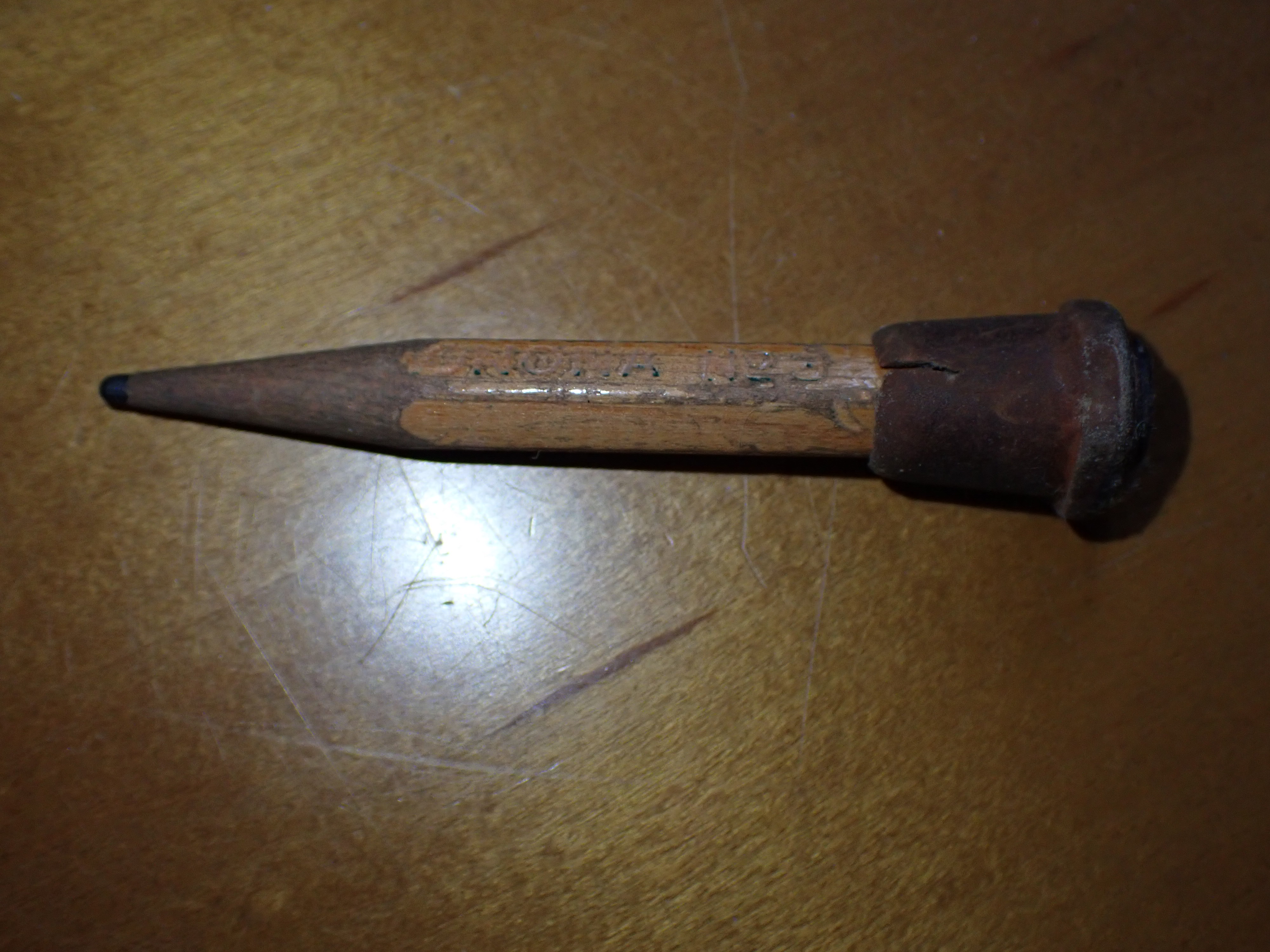
nub by tom clausen

26 Thursday Feb 2026

Posted by Tom Clausen in americana, close up details, Cornell, haiku, Ithaca, nature, photos, poems and photos, reflections

≈ 1 Comment

Tags

behind, collections, father, haiku, left behind, life, memories, nub, nubs, pencils, photography, photos, poetry, writing

the pencils
my father left behind
just nubs

South by Southeast by tom clausen

01 Friday Dec 2023

Posted by Tom Clausen in haiku, Published Poems, South by South East

≈ Leave a comment

Tags

asia, haiku, photography, poem, poetry, South by Southeast, south-china-sea, writing

another full moon
my checkbook still
unbalanced

ballet studio
sign for cars to park
nose forward


asleep on the sidewalk
sunrise
on his beard


South by Southeast v.8 no. 3 (2001)


white water-
a birch tree
fallen

S x SE 10th Anniversary Haiku & Haiku Arts v.10 no.3 ( 2003)

riding the elevator
with me
a leaf


daybreak-
spider with swollen egg sac
on the toothpaste

South by Southeast v.7 no. 1 (2000)

Gusts tanka by Tom Clausen

13 Monday Sep 2021

Posted by Tom Clausen in Gusts, poems and photos, Published Poems, tanka

≈ Leave a comment

Tags

Gusts, poetry, tanka, writing

to ward off
who knows what
i buy a dozen pencils
to be armed
just in case


***


covered quietly
by falling snow
in the woods
along with everything else
the deer’s remains


***


with three running lights
burning through the night
our neighbor’s house shipshape
on it journey
to tomorrow


-Gusts no. 33 spring/summer 2021

homework- review- by tom clausen

01 Sunday Dec 2019

Posted by Tom Clausen in americana, Chapbooks, haiku, Haiku Way of Life, Lynx,, tanka, Published Poems, senryu, tanka

≈ Leave a comment

Tags

book review, chapbook, family, family life, haiku, home, homework, life, poems, poetry, senryu, tanka, writing

Homework by Tom Clausen. Saddle-stitched, full color cover, 4″ x 6″, 36 pages. $10., ppd. ISBN: 1-903543-00-2. Order from Snapshots Press, 132 Crosby, Liverpool, L23 8XS, England.

To quote the jacket notes: “Focusing squarely on domestic life, this collection of haiku, senryu, and tanka is often funny, often sad and always paradoxically both familiar and eye-opening.” It cannot be said better nor more succinctly what this newest book by Tom Clausen contains. I can only add my continuing praise for Tom’s work. It is always a revelation and delight how he seizes on the tiniest experience, and through his examination of it and the cool observation his own feelings, carries it over into a major event. This leaves the reader wondering, “Now, why did I not notice that?” and “Why did I not think of that as material for a poem?”. It seems that tanka is especially designed for the methods of Tom Clausen. Even when aware of the smallest thing, he is also aware of how that thing or event is affecting him. This occurs even in his haiku.

While some purists might fault his haiku for not being closely enough aligned with the nature-nature viewpoint, his sensibilities are absolutely accurate for tanka. This collection gains, I think, by the inclusion of his haiku (which often portray the lighter moments of family living). They seem to play off and actually highlight the attributes of his tanka. Altogether, the editing and arrangement of the poems seems especially fine and relevant. For anyone who has grown up in a family or is living in a family now, this book will take away those terrible moments of aloneness when one felt that no one else in the world ever had such moments of doubt, despair and pure undiluted joy. Tom has been there, and he has the courage to face them directly and honestly, and to continue to hang with the feelings until he has created pure poetry out of them.

no longer me
it proves a mystery who it is
I’ve become
walking around this house
with my family there inside

I sort of knew
my coffee cup
was empty –
so much I look in it
just to see

The sensitivity of the editor, John Barlow, is shown in the choice of a drawing done by Tom’s young daughter, Emma Clausen, as cover along with the insider joke of the title of the book – Homework. Delight piles on delight with this one. Review written by Jane Reichhold

this complete enigma by tom clausen

01 Sunday Dec 2019

Posted by Tom Clausen in poems and photos, Published Poems, tanka

≈ 2 Comments

Tags

documentation, five lines down, little poems, observation, poems, poetry, tanka, writing

Lynx- XVII:1, February, 2002


out in the yard
the crow caws crazily
as if it knows my life
quite like
the compost i leave…

**


with my son
we pass the house
where he was conceived –
a certain run down look
weeds in the window box

**

not much celebration
to this winter solstice
but the neighbors maple
just big enough for a squirrel
and two bird nests


**


the deep blue sky
goes so far
yet the photo has borders
like those we come to
in our love…


**


its a little flaw
i’ve come to accept
as it may be…
these overmatched feelings
loving too much

**


cold rain
in another town
the streets empty –
from one house
a gift of wood smoke


**


this complete enigma
of me wanting more solitude,
then company in turn
on my terms
at just the right time


**


I have seen the cat
sleep most of the day
and yet seem satisfied
my calendar says to show
a cat a piece of gold


Why We Write Haiku by Tom Clausen

23 Friday Jun 2017

Posted by Tom Clausen in clouds, Favorite Haiku, haiku, Haiku Way of Life, Ithaca, landscapes, nature, poems and photos, sun, sunsets, Wabi Sabi

≈ Leave a comment

Tags

art, haiku, inspiration, life, photography, photos, poetry, relationships, sunsets, writing

Why We Write Haiku ( this list contains alot of overlapping and was intended just as a consideration of what might be some reasons…)

to express gratitude
to report something real with honesty
to share something directly and concretely
to share and create meaning
to say something meaningful in as few words possible
to communicate
to find a voice
to give a voice to nature and discovery
to celebrate our connection to nature, to all that is non-human
to sharpen and develop our awareness as a witness
to express observable truth
to give praise
to celebrate existence
grounding and centering
transcendence
to express admiration
to identify those primordial forces we love or relate to
to feel a sense of purpose
to express our longing and belonging
love for our being here now
to express joy and happiness in a moment
to show what is lost and found
as a means of catharsis
to show the aha moment and suggest the wonder of existence
the desire to turn words into greater awareness and understanding
in the eternal search for meaning and identity
to maintain a healthy focus and awareness
to attain some levity or lightness to our being
prayer like reverence and respect for what is before us
to achieve some clarity
to reduce confusion
to express insight
to improve and gain relationships and understanding our place in the world
in hope of finding a peace of mind and heart
to have an epiphany
to reaffirm what we know but had forgotten…nostalgia for our child mind
for the practice and routine of forgetting ourselves
an alternative focus and refreshing point of view
alter-identity
as a release from what bothers us or distracts us from the poetic in our lives
as an antidote to anger
to exercise a spiritual communion with our place in this world
to commune with the muse
to attain credibility
to fulfill the searching aspect of our being here now
to recognize what is mortal and immortal in us and our world
as a form of satori and connection
because we love poetry and sharing something
because we feel inspiration in moments freely found anyplace, anytime, anywhere
because we are in tune with a universal reality
to get some satisfaction
as a path out of depression
to find ‘the way’
to see and feel light
to report natural ‘news’
to commune with nature
nurture of a spiritual relation
to join a community of people sharing a poetic point of view
to be in the now
because we believe in nature and the poetic relationships small, large and wonderful
as a means of disciplined expression
in recognition of natural nuance
to exercise our senses
to praise the life in the inanimate
to write concisely
to write what is in the heart
to find our-self outside our-self
to respond to a calling
to give voice to wabi -sabi aesthetics
to be at home on this seamless journey through the here and now


Sun setting in some clouds on west hill... from Hungerford Hill Rd.-east hill today 6-21-15.

← Older posts

Recent Posts

  • Haiku by Agnes Savich, 11-28-26, at Mann Library
  • high clouds – tom clausen
  • bare trees – tom clausen
  • Haiku by Agnes Savich, 11-27-26, at Mann Library
  • brink of a breeze – tom clausen

Categories

  • A Work of Love (46)
  • abandoned buildings (26)
  • Akitsu Quarterly (8)
  • American Haibun & Haiga (3)
  • americana (834)
  • autumn (272)
  • barns (21)
  • bees (24)
  • bicycles and cycling (5)
  • birds (48)
  • Book reviews (8)
  • bottle rockets (8)
  • brass bell (4)
  • bunnies-rabbits (5)
  • butterflies (12)
  • cats (12)
  • cemeteries (9)
  • Chapbooks (9)
  • close up details (798)
  • clouds (124)
  • Cornell (31)
  • deer (52)
  • Dim Sum (33)
  • dogs (10)
  • dragonflies (8)
  • Favorite Haiku (13)
  • fields (165)
  • flowers (201)
  • forests (49)
  • Frogpond (24)
  • frogs (11)
  • fungus (31)
  • gardens (100)
  • gorges (67)
  • Gusts (8)
  • haibun (5)
  • haiku (915)
  • Haiku Circle (3)
  • Haiku Poets at Mann Library (2)
  • Haiku Way of Life (18)
  • hedgerow (3)
  • Heron's Nest (6)
  • hills and mountains (42)
  • horses (3)
  • Hummingbird (1)
  • ice (31)
  • insects (6)
  • Interviews (2)
  • Ithaca (405)
  • lakes and rivers (102)
  • landscapes (334)
  • Laughing To Myself (4)
  • leaves (200)
  • lichen (2)
  • light (89)
  • Lynx,, tanka (3)
  • mailboxes (4)
  • Mann Library Daily Haiku (324)
  • Mayfly (1)
  • Mexico (3)
  • milkweed (14)
  • Modern Haiku (26)
  • moon (18)
  • nature (1,120)
  • ocean imagery (13)
  • Old Vehicles (11)
  • One Day (5)
  • otata (1)
  • parks (105)
  • paths (199)
  • Peru (21)
  • photos (804)
  • plants (311)
  • poems and photos (1,685)
  • ponds (49)
  • Published Poems (379)
  • puddles (21)
  • raindrops (11)
  • Readings (7)
  • reflections (69)
  • roads (50)
  • rust (9)
  • sea shore (3)
  • senryu (78)
  • shadows (13)
  • snakes (7)
  • snow (94)
  • South by South East (1)
  • spring (275)
  • squirrels (11)
  • summer (325)
  • sun (71)
  • sunsets (43)
  • tanka (129)
  • Tom Clausen biographical info (16)
  • Tom poems at other sites (19)
  • Tom selected favorites (23)
  • trains (21)
  • trees (285)
  • turtles (9)
  • vines (28)
  • Wabi Sabi (211)
  • water reflections (136)
  • waterfalls (40)
  • wild graces (1)
  • Willy the Beeman (1)
  • winter (205)
  • Woodnotes (1)

Published poems

  • Modern Haiku
  • Akitsu Quarterly
  • ephemerae
  • Mayfly
  • Frogpond
  • Heron’s Nest
  • Woodnotes
  • Gusts
  • red lights
  • Haiku Canada
  • Raw Nervz
  • American Tanka
  • Dim Sum
  • Haiku Headlines
  • Ribbons
  • Haiku Quarterly
  • bottle rockets
  • South by Southeast
  • black bough
  • Heron’s Nest
  • Frogpond
  • Akitsu Quarterly
  • Modern Haiku
  • Mayfly
  • Haiku Canada

Archives

  • November 2026
  • October 2026
  • September 2026
  • August 2026
  • July 2026
  • June 2026
  • May 2026
  • April 2026
  • March 2026
  • February 2026
  • January 2026
  • December 2025
  • November 2025
  • August 2024
  • July 2024
  • June 2024
  • May 2024
  • April 2024
  • March 2024
  • February 2024
  • January 2024
  • December 2023
  • November 2023
  • October 2023
  • September 2023
  • August 2023
  • July 2023
  • June 2023
  • May 2023
  • April 2023
  • September 2022
  • July 2022
  • June 2022
  • May 2022
  • November 2021
  • October 2021
  • September 2021
  • July 2021
  • April 2020
  • December 2019
  • November 2019
  • October 2019
  • April 2019
  • March 2019
  • December 2018
  • November 2018
  • October 2018
  • September 2018
  • June 2018
  • April 2018
  • March 2018
  • January 2018
  • December 2017
  • October 2017
  • September 2017
  • June 2017
  • May 2017
  • April 2017
  • March 2017
  • January 2017
  • December 2016
  • November 2016
  • October 2016
  • September 2016
  • August 2016
  • June 2016
  • December 2015
  • October 2015
  • September 2015
  • August 2015
  • July 2015
  • June 2015
  • May 2015
  • April 2015
  • March 2015
  • February 2015
  • January 2015
  • August 2014
  • March 2014
  • February 2014
  • January 2014
  • December 2013

Recent Comments

Ezekiel Fish's avatarEzekiel Fish on over the dam – tom …
Tom Clausen's avatarTom Clausen on over the dam – tom …
Ezekiel Fish's avatarEzekiel Fish on over the dam – tom …
Ezekiel Fish's avatarEzekiel Fish on overnight rain – tom…

Meta

  • Create account
  • Log in
  • Entries feed
  • Comments feed
  • WordPress.com

Categories

  • A Work of Love (46)
  • abandoned buildings (26)
  • Akitsu Quarterly (8)
  • American Haibun & Haiga (3)
  • americana (834)
  • autumn (272)
  • barns (21)
  • bees (24)
  • bicycles and cycling (5)
  • birds (48)
  • Book reviews (8)
  • bottle rockets (8)
  • brass bell (4)
  • bunnies-rabbits (5)
  • butterflies (12)
  • cats (12)
  • cemeteries (9)
  • Chapbooks (9)
  • close up details (798)
  • clouds (124)
  • Cornell (31)
  • deer (52)
  • Dim Sum (33)
  • dogs (10)
  • dragonflies (8)
  • Favorite Haiku (13)
  • fields (165)
  • flowers (201)
  • forests (49)
  • Frogpond (24)
  • frogs (11)
  • fungus (31)
  • gardens (100)
  • gorges (67)
  • Gusts (8)
  • haibun (5)
  • haiku (915)
  • Haiku Circle (3)
  • Haiku Poets at Mann Library (2)
  • Haiku Way of Life (18)
  • hedgerow (3)
  • Heron's Nest (6)
  • hills and mountains (42)
  • horses (3)
  • Hummingbird (1)
  • ice (31)
  • insects (6)
  • Interviews (2)
  • Ithaca (405)
  • lakes and rivers (102)
  • landscapes (334)
  • Laughing To Myself (4)
  • leaves (200)
  • lichen (2)
  • light (89)
  • Lynx,, tanka (3)
  • mailboxes (4)
  • Mann Library Daily Haiku (324)
  • Mayfly (1)
  • Mexico (3)
  • milkweed (14)
  • Modern Haiku (26)
  • moon (18)
  • nature (1,120)
  • ocean imagery (13)
  • Old Vehicles (11)
  • One Day (5)
  • otata (1)
  • parks (105)
  • paths (199)
  • Peru (21)
  • photos (804)
  • plants (311)
  • poems and photos (1,685)
  • ponds (49)
  • Published Poems (379)
  • puddles (21)
  • raindrops (11)
  • Readings (7)
  • reflections (69)
  • roads (50)
  • rust (9)
  • sea shore (3)
  • senryu (78)
  • shadows (13)
  • snakes (7)
  • snow (94)
  • South by South East (1)
  • spring (275)
  • squirrels (11)
  • summer (325)
  • sun (71)
  • sunsets (43)
  • tanka (129)
  • Tom Clausen biographical info (16)
  • Tom poems at other sites (19)
  • Tom selected favorites (23)
  • trains (21)
  • trees (285)
  • turtles (9)
  • vines (28)
  • Wabi Sabi (211)
  • water reflections (136)
  • waterfalls (40)
  • wild graces (1)
  • Willy the Beeman (1)
  • winter (205)
  • Woodnotes (1)

Archives

  • November 2026
  • October 2026
  • September 2026
  • August 2026
  • July 2026
  • June 2026
  • May 2026
  • April 2026
  • March 2026
  • February 2026
  • January 2026
  • December 2025
  • November 2025
  • August 2024
  • July 2024
  • June 2024
  • May 2024
  • April 2024
  • March 2024
  • February 2024
  • January 2024
  • December 2023
  • November 2023
  • October 2023
  • September 2023
  • August 2023
  • July 2023
  • June 2023
  • May 2023
  • April 2023
  • September 2022
  • July 2022
  • June 2022
  • May 2022
  • November 2021
  • October 2021
  • September 2021
  • July 2021
  • April 2020
  • December 2019
  • November 2019
  • October 2019
  • April 2019
  • March 2019
  • December 2018
  • November 2018
  • October 2018
  • September 2018
  • June 2018
  • April 2018
  • March 2018
  • January 2018
  • December 2017
  • October 2017
  • September 2017
  • June 2017
  • May 2017
  • April 2017
  • March 2017
  • January 2017
  • December 2016
  • November 2016
  • October 2016
  • September 2016
  • August 2016
  • June 2016
  • December 2015
  • October 2015
  • September 2015
  • August 2015
  • July 2015
  • June 2015
  • May 2015
  • April 2015
  • March 2015
  • February 2015
  • January 2015
  • August 2014
  • March 2014
  • February 2014
  • January 2014
  • December 2013
Follow tom clausen on WordPress.com

Recent Comments

Ezekiel Fish's avatarEzekiel Fish on over the dam – tom …
Tom Clausen's avatarTom Clausen on over the dam – tom …
Ezekiel Fish's avatarEzekiel Fish on over the dam – tom …
Ezekiel Fish's avatarEzekiel Fish on overnight rain – tom…

Meta

  • Create account
  • Log in
  • Entries feed
  • Comments feed
  • WordPress.com

Blog at WordPress.com.

  • Subscribe Subscribed
    tom clausen
    Join 444 other subscribers

    Have a WordPress.com account? Log in now.

  • tom clausen
    View site in Reader
    Manage subscriptionsSign upLog in
    Report this content
    Collapse this bar
Loading Comments...